Does Your Home Need A Rewire?
- Knob and tube wiring, common in homes built before about 1940
- Cloth insulated wiring with brittle or crumbling insulation
- Aluminum branch circuit wiring, installed roughly 1965 to 1975
- Two prong outlets everywhere, meaning ungrounded circuits
- A history of breaker trips, dimming, and dead circuits that repairs never quite fix
- Insurance carriers declining or surcharging coverage over wiring age
How We Rewire With Less Damage
A rewire does not have to mean gutting the house. We fish new circuits through attics, crawlspaces, and wall cavities, opening drywall only where necessary and in places chosen to be easy to patch. Occupied homes are rewired in stages so you keep power in the rooms you are living in.
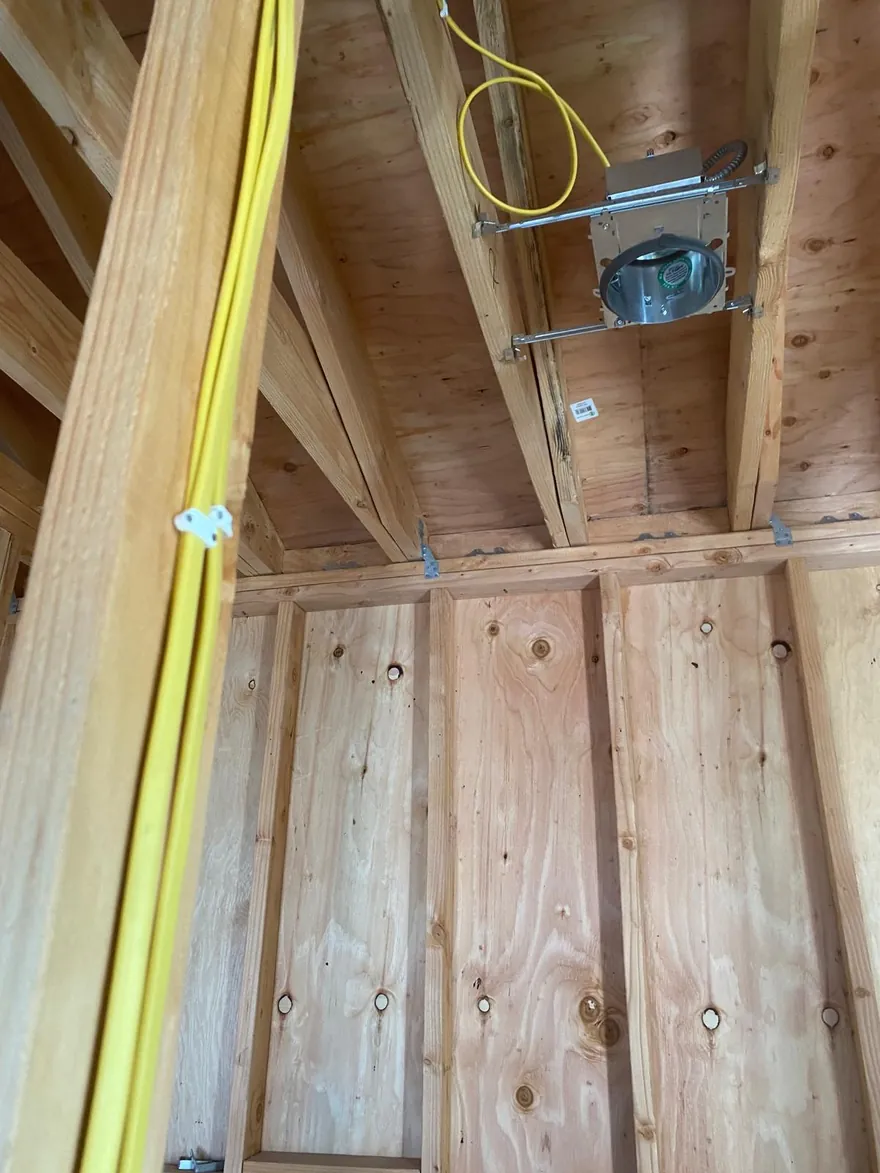
Open framing during a remodel is the cheapest possible time to rewire. If you are already opening walls, talk to us before the drywall goes back up.
What A Rewire Includes
New copper branch circuits, grounded outlets throughout, AFCI and GFCI protection to current code, new switches and dimmers, smoke and carbon monoxide detector circuits, and usually a panel evaluation, since original panels rarely match a modern circuit plan. Permitted and inspected, with insurance ready documentation when it is done.
Knob And Tube And Insurance
Many carriers now decline new policies on homes with active knob and tube, and escrow timelines make it urgent. We document the replacement thoroughly, which is exactly what underwriters want to see.